- Home
- Government
- Water Resources
- Stormwater Management
- Stormwater Utility
Stormwater Utility
Download the full Stormwater Utility Program Introduction Here
Stormwater Utility Approved
On January 22, 2026, the Savannah City Council has approved the creation of a Stormwater Utility (SWU), establishing a dedicated and sustainable funding source to support the City’s stormwater and drainage system.
The Stormwater Utility will strengthen Savannah’s ability to maintain aging infrastructure, address long-standing drainage issues, and prepare for future weather-related challenges.
Challenges & Future Needs
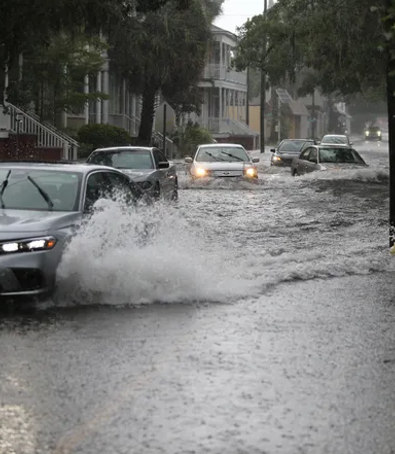
The City is facing increasing challenges related to stormwater management, including:
- Aging and Expanding Infrastructure – More maintenance is needed as the system grows and gets older.
- Historic Drainage Issues – Long-standing flooding and water management problems.
- Climate Change – Future weather patterns may increase demand on drainage systems.
The Stormwater Utility was approved to provide a long-term, reliable solution to these challenges.
Current Stormwater Funding
The City of Savannah uses multiple funding sources to address drainage issues and maintain the stormwater system. These include:
- Federal Grants – Funds awarded by the federal government for drainage improvements.
- SPLOST (Special Purpose Local Option Sales Tax) Funds – Local sales tax revenue allocated for infrastructure projects.
- General Fund Appropriations – Money from property and sales taxes used for city services.
What is a Stormwater Utility?
A Stormwater Utility functions like other city utilities (water, sewer, sanitation) and is funded through a user fee rather than taxes. This means:
- Properties that generate more stormwater runoff (e.g., large paved areas) would pay higher fees.
- Revenue is used exclusively for stormwater system maintenance, improvements, and capital projects..
- The program will reduce reliance on the General Fund, freeing up tax dollars for other city services.
Other Cities Using This Model
Many cities in Georgia already have a Stormwater Utility, including:
- Griffin (first in Georgia, established in 1998)
- Garden City, Richmond Hill, Statesboro, Brunswick, Hinesville
- Currently, around 75 cities in Georgia operate a Stormwater Utility.
Stormwater Utility Project Overview and Background
The City hired Stantec in August 2024 after a competitive Request for Proposal (RFP) process to serve as the City’s consultant to potentially implement a Stormwater Utility in Savannah. This study included the following:
- Assess Current Services & Costs – Evaluate the current and future stormwater management service delivery model and determine the existing and future costs.
- Analyze Potential User Fees – Establish a fair and equitable way to charge for stormwater services via a user fee program.
- Prioritize Drainage Projects – Develop a system to determine which projects should be implemented and in what prioritized order.
- Public Engagement & Education – Inform residents and businesses about the proposed enhancements to service delivery and the funding strategy.
Key Dates and Schedule:
- The City Council will be briefed on the future stormwater management service delivery and funding strategy at the Budget Retreat (November 17) and the City Council Workshop (November 25) with a possible ordinance adoption/approval to implement the Stormwater Utility on December 11, 2025.
- Savannah City Council approved the Stormwater Utility on December 11, 2025
- The first Stormwater Utility bill is scheduled for mailing to customers starting July 1, 2026.
What This Means for City Utility Customers:
- User fees are based on the amount of stormwater runoff generated by each property and the level of service required to manage that runoff.
- Stormwater Utility revenue will be used solely for drainage and stormwater management activities.
- Funding will support enhanced system maintenance, infrastructure upgrades, and prioritized drainage projects throughout the city.
Presentations
- View the full Stormwater Program Update (November 2024)
- View the full Stormwater Program Funding Presentation (March 2025)
- View the full Proposed Stormwater Utility Community Presentation (April 2025)
- View the full Stormwater Utility Meeting Summary Presentation (May 2025)
- View the full Stormwater Utility Focus Groups Presentation (August 2025)
- View the full Stormwater Neighborhood Association Presidents Meeting Presentation (September 2025)
- View the Full Stormwater Utility Community Presentation (November 2025)
- Stormwater Utility Focus Group Position Paper Summary (November 2025)
- Stormwater Utility City Council Workshop Presentation (November 2025)
- Stormwater Utility Project Memorandum (January 2026)
- What is stormwater runoff?
-
Stormwater runoff is rainfall that flows off roofs, driveways, parking lots, streets, and other compacted surfaces during rainstorms. Rather than being absorbed into the ground, the water flows into ditches, culverts, catch basins and storm sewers, which discharge into local canals, creeks, and rivers. In the City of Savannah, stormwater runoff can cause flooding, carry pollution to waterways, erode soil and stream banks, and impact aquatic habitats.
- What are some examples of typical City of Savannah stormwater problems?
-
Stormwater problems may include street or structural flooding, clogged or failing underground pipes and culverts, stream bank erosion, and pollution affecting our local waterways. Over the past several years the City has experienced many severe flooding events that have made roadways impassable and have resulted in varying levels of flooding which caused property damage.
- Where does stormwater pollution typically originate?
-
Unlike treated wastewater from an industry or a wastewater treatment plant, stormwater pollution is created by stormwater runoff running over the land and picking up pollutants and discharging them through the drainage system to local water bodies. Examples of common stormwater runoff pollutant sources include fertilizers, pesticides, pet waste, sediments, oils, salts, trace metals, and litter. These discharges and their associated pollutants can originate from yards, roofs, construction sites, parking lots, and streets.
- What kind of stormwater management services does the City of Savannah provide?
-
The City of Savannah’s Water Resources Service Center is responsible for the maintenance and operation of the City’s public drainage system, which includes 7 pump stations, 416 miles of pipes, 147 miles of ditches, 31 tide gates, and 21,043 of catch basins and manholes. The City must undertake various maintenance activities including the cleaning of the drainage system; replacement of aging culverts and drainage structures; operation of pump stations during rain events, and construction of new culvert systems to improve stormwater drainage and reduce flooding.
- How does the City of Savannah currently fund municipal stormwater management services?
-
Stormwater services are currently funded through a combination of sources, which include primarily ad-valorem taxes (property tax) and Local Option Sales Tax (LOST) from the City’s General Fund. The City also receives special purpose local option sales tax (SPLOST) for the completion of stormwater capital projects as well as project-specific grant funds. This combination of funding sources is currently insufficient to fully meet the service expectations of our citizens and businesses and adequately fund the operational and capital project needs of the City’s stormwater system.
- What is a Stormwater Utility?
-
A Stormwater Utility is an operational and funding mechanism established to manage and maintain stormwater infrastructure, reduce flooding, and ensure compliance with environmental regulations. It operates similarly to water and wastewater utilities, with users paying fees based on their contribution to stormwater runoff and the corresponding stormwater management services that they receive from the City. One key aspect of a Stormwater Utility is that fees can only be used for stormwater management related expenses.
- Why is the City of Savannah considering a Stormwater Utility and User Fee Program?
-
The resources needed to provide adequate funding for stormwater management service delivery within the City is increasing. A Stormwater Utility and user fee would provide the City with a way to equitability assign and recover the cost of providing stormwater services to customers through a dedicated funding source that is based on the customer’s contribution of runoff to the City stormwater system and the corresponding services received.
- What is a Stormwater Utility user fee?
-
The Stormwater Utility user fee is a charge to customers based on the amount of impervious surface (e.g., roofs, driveways, parking lots) on their property, as these surfaces are directly related to the quantity of stormwater runoff that the property generates, and the stormwater services provided to that property by the City.
- Why implement a Stormwater Utility user fee to fund stormwater management services?
-
By establishing a dedicated funding source through Stormwater Utility fees, the City can ensure that the revenue generated from the fee for managing and maintaining this important system is sufficient and dedicated to this purpose. A fee based on impervious surface area is the most equitable way to allocate stormwater management costs, because all developed properties that receive stormwater services pay the fee, regardless of tax-exempt status. This funding mechanism also ensures that all funding received is spent on stormwater-related services and capital construction.
- Will the revenue from the Stormwater Utility fee go to the General Fund use by other departments?
-
No, the Stormwater Utility fee revenue will be placed in a separate enterprise fund (similar to the City’s Water-Sewer Enterprise Fund) that, by ordinance, can only be spent on stormwater management related activities. This is one of the major advantages of this fee – it can only be used to address stormwater management issues.
- How is a customer’s Stormwater Utility fee calculated?
-
The Stormwater Utility fee for each property would be based on the square footage of impervious surface on the given parcel, minus any credits provided as described later in this FAQ.
- How did the City of Savannah determine impervious surface areas for parcels?
-
Impervious surfaces are generally defined as any man-made surface that does not readily absorb rainfall or stormwater runoff, and which impedes the natural flow of water into the soil. As such, some examples of impervious surfaces include roadways, building roofs, parking lots, compacted gravel, basketball/ tennis courts, etc. The City uses GIS mapping, aerial imagery, and parcel data to measure the amount of impervious surfaces in square feet. If a parcel undergoes changes, such as adding a new driveway or building or parking spaces, the impervious area measurements will be updated accordingly.
- Why is a Stormwater Utility fee more equitable as compared to ad-valorem tax funding?
-
A parcel’s taxable value does not correlate well to is stormwater runoff characteristics, so traditional property taxes are not the most equitable way to allocate the cost for stormwater services to customers. For example, a large truck and container storage parking lot has a lot of impervious surface and generates a large quantity of stormwater runoff, but generally has a low taxable value. The future Stormwater Utility fee system will ensure the customers pay based on the contribution of runoff generated by the parcel, and the demand the parcel places on the stormwater system and the services that they receive.
- What services will the customers of a future Stormwater Utility receive?
-
The revenues from the Stormwater Utility fee will be used to reduce the occurrence and magnitude of street and property flooding, provide better planning for the future, increase the maintenance and repair of the existing stormwater system, reduce sedimentation and erosion, and reduce non-point source runoff pollution to protect our local canals, wetlands, rivers, and coastal marshlands.
- How soon can customers expect improvements to address flooding issues?
-
The City will immediately put the Stormwater Utility revenue to work ensuring that City crews will have adequate staffing and equipment to maintain the drainage infrastructure and implement capital improvement projects. Because there are numerous areas in the City that have experienced flooding problems, customers may not see improvements in their neighborhood immediately. But rest assured, the City will address the flooding issues in your neighborhood as soon as possible.