
In 1779, as the American Revolution intensified, an extraordinary regiment sailed from the Caribbean to fight in Georgia. Known as the Chasseurs Volontaires de Saint-Domingue, they were free men of color from the French colony of Saint-Domingue (present-day Haiti). These light infantry soldiers constituted the largest unit of men of African descent to fight in the American Revolution.
Their service at the Siege of Savannah forged lasting historical ties between Haiti and the City of Savannah.
French officers praised their discipline, resilience, and marksmanship, noting their ability to endure harsh conditions and quickly master European military drill. Despite these qualities, commanders relegated them to trench work rather than frontline combat.
After the Continental Congress ratified an alliance with France, French and American forces launched a joint effort in 1779 to retake Savannah from the British. Approximately 545 Chasseurs joined Admiral Charles Henri d’Estaing’s expedition, along with roughly 3,000 additional troops.
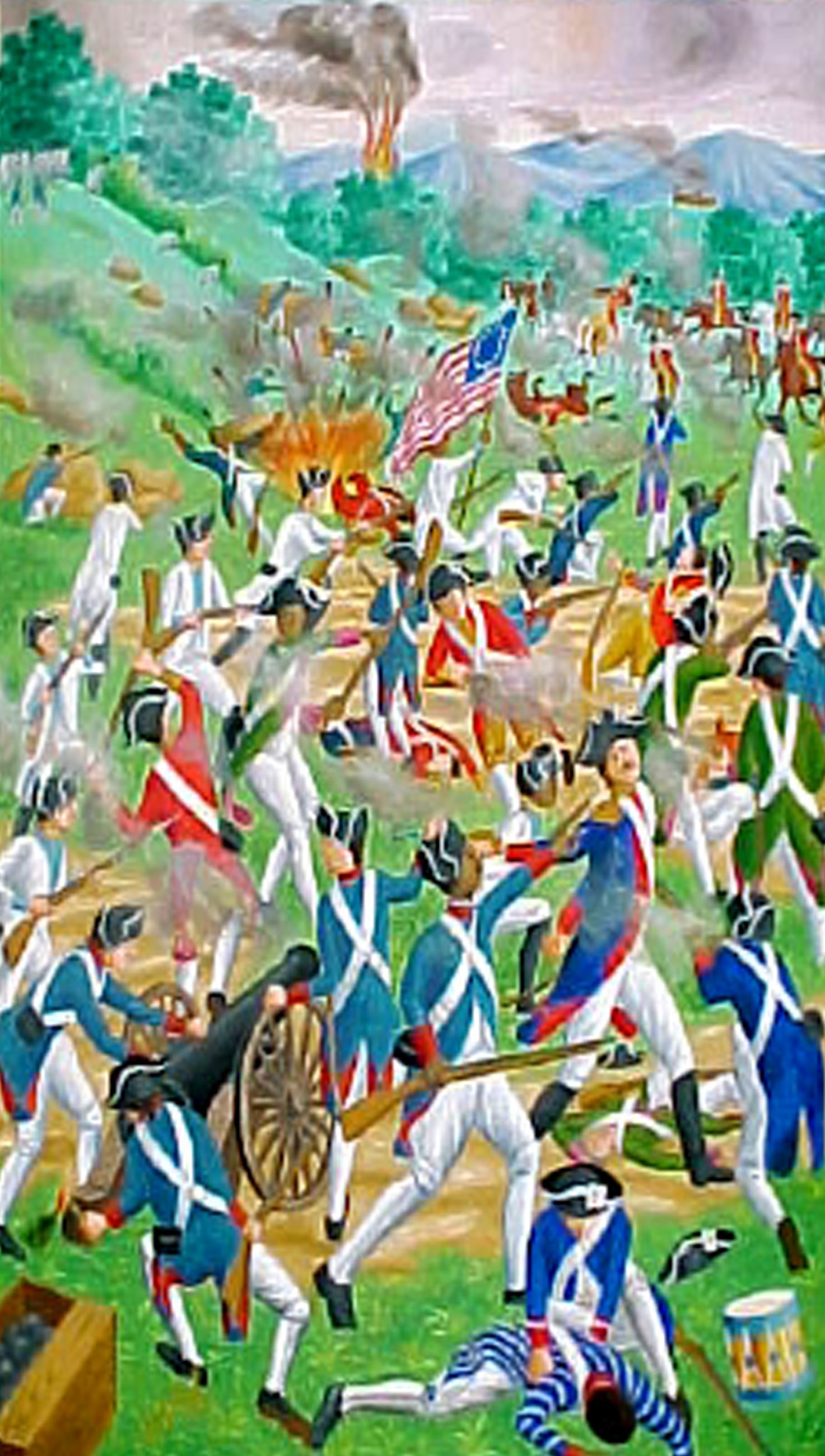
Painting depicting the Chasseurs Volontaires in Siege of Savannah
Presented to the City of Savannah by the Republic of Haiti on October 9, 1976
After some initial skirmishes against the British in Savannah in late September, d’Estaing ordered the ill-fated assault that would end the Siege of Savannah on October 9th at the Spring Hill redoubt. Though historical accounts differ on the precise role of the Chasseurs during the attack, it is certain that they fought bravely in support of the American cause. The assault failed, and the Franco-American army retreated. The Siege of Savannah became one of the bloodiest engagements of the war, with an estimated 244 Franco-American casualties, including at least 25 documented deaths of members the Chasseurs Volontaires.
Many historians believe that some men who fought in Georgia later participated in the Haitian Revolution, including Henri Christophe, who would become the first King of Haiti. Their experience in Savannah contributed to evolving ideas about liberty, citizenship, and rights, which would culminate in Haiti’s independence in 1804.
For more than a century, the Chasseurs’ contributions went largely unrecognized in the United States amid segregation and racial prejudice. In 1976, during Savannah’s Bicentennial celebration, the city strengthened its connection with Haiti by inviting Haitian diplomats to Siege of Savannah commemorations.
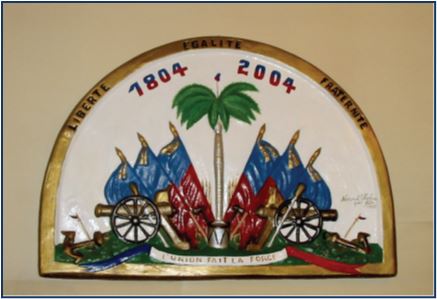
Commemorative tablet created by artist Normil Charles presented to the City of Savannah by St. Marc, Haiti, 2003.
On display in the Savannah City Hall Council Chamber.
Over time, Savannah and Saint-Marc, Haiti, developed an informal sister-city relationship marked by exchanges and mutual support. In 2003, during a Haitian delegation’s visit, the mayor of Saint-Marc presented Savannah’s mayor with a commemorative tablet created by artist Normil Charles.
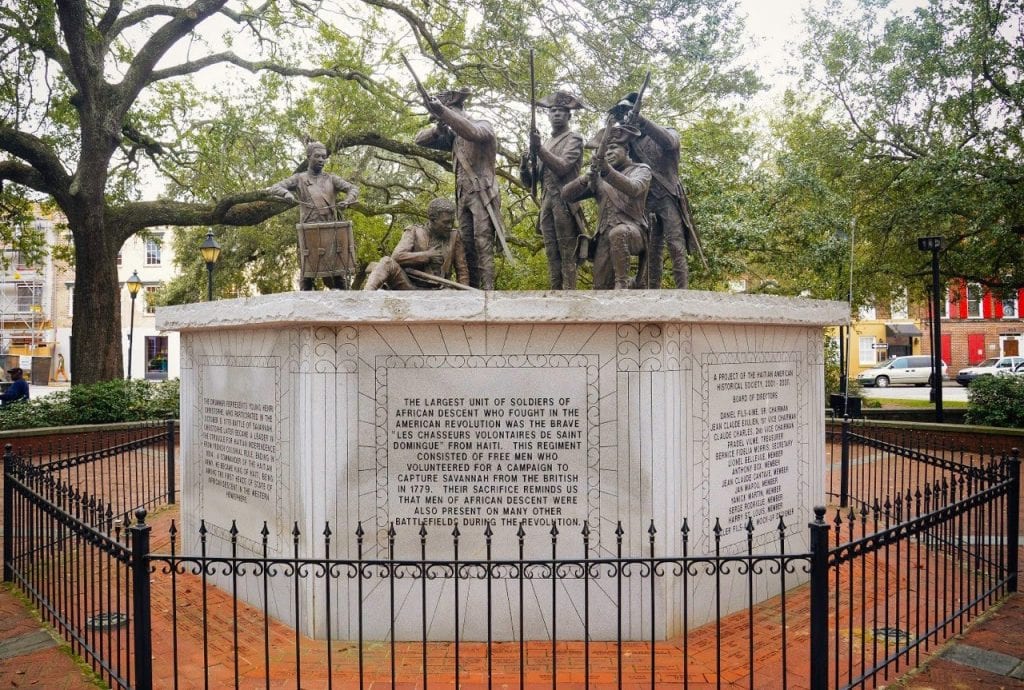
Haitian Monument, Franklin Square, 2009.
Public Information Office Photographs (unprocessed addenda), City of Savannah Municipal Archives.
Savannah’s Haitian Monument, located in Franklin Square, was unveiled in 2007 and completed in 2009. Planned and funded by the Haitian American Historical Society, it features six life-sized bronze Chasseurs atop a granite pillar inscribed with their history. Five figures represent the unnamed Black soldiers who served with the Chasseurs and a drummer boy symbolizes Henri Christophe, believed to have fought in the Siege of Savannah.
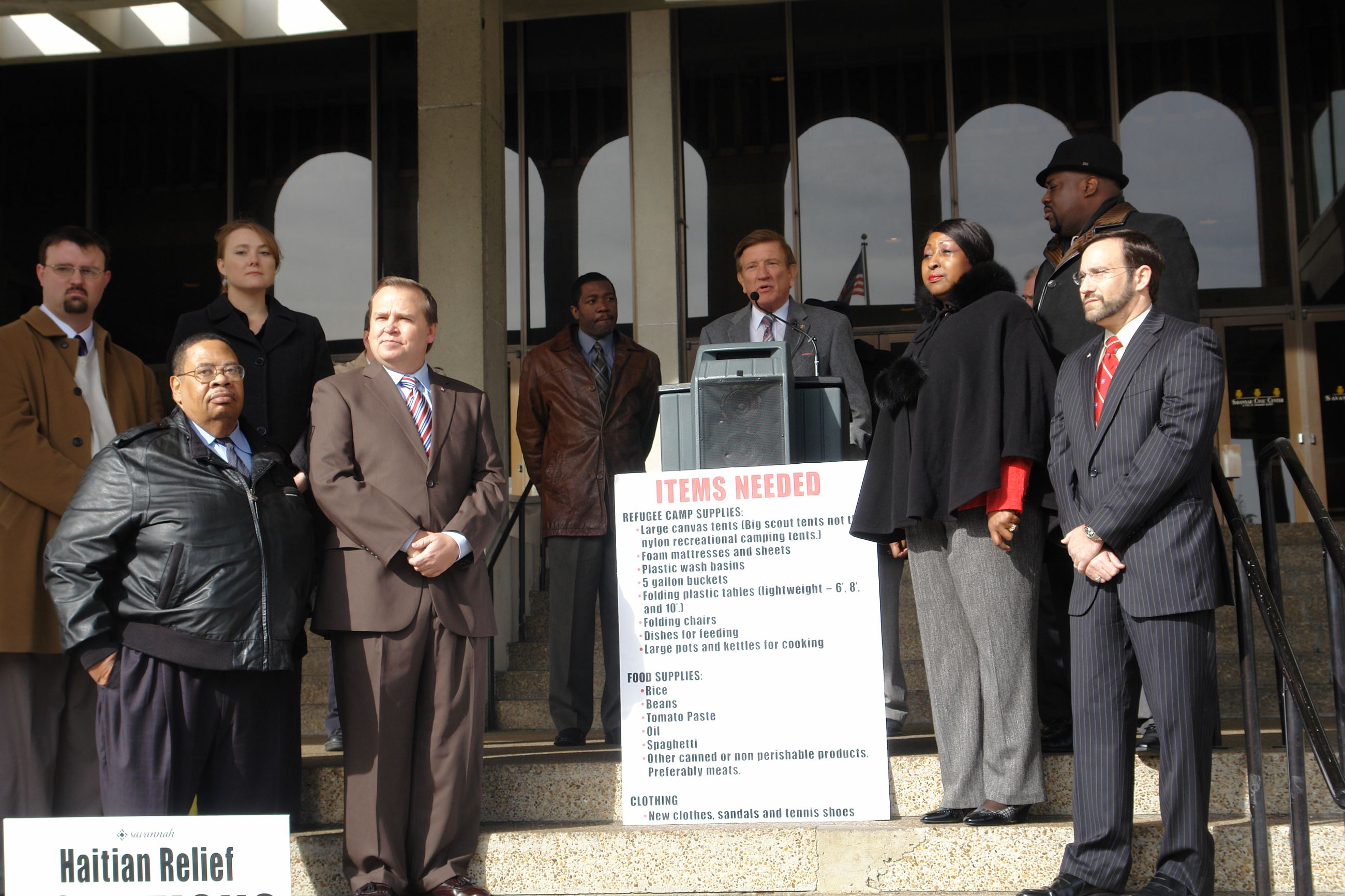
Haitian relief supply drive press conference, 2010.
Public Information Office Photographs (unprocessed addenda), City of Savannah Municipal Archives.
Savannah has continued to support Haiti in times of need, including sending heavy machinery to Saint-Marc in 2008 and organizing relief supplies after Haiti’s devastating 2010 earthquake.