- Home
- Residents/Visitors
- Special Projects & Initiatives
- Civic Legacy
- Background and History
Background and History
Return to Future of Civic Center homepage
In recent decades, the City of Savannah has been actively planning for enhanced performance venues at the aging Savannah Civic Center, situated on a 7.0-acre site in our National Historic Landmark District. This site features the 9,700-seat Martin Luther King, Jr. Arena, the 2,500-seat Johnny Mercer Theatre, a community ballroom, multiple versatile rooms, and a 275-space surface parking lot.
In 2022, Savannah celebrated the opening of the cutting-edge Enmarket Arena on Stiles Avenue, positioned just west of downtown and east of Historic Carver Village. During the same year, City Manager Jay Melder presented a conceptual plan to the City Council, outlining the following proposals for the Civic Center site:
- Demolishing the Martin Luther King Jr. Arena, restoring the Johnny Mercer Theater, ballroom and meeting rooms;
- Creating a new entrance along the building’s south façade;
- Developing a new municipal office building on the north side of the Civic Center, reducing the City’s need to lease office space; and
- Restoring a larger section of the Oglethorpe Plan, including two trust lots and four tithing lots, which were lost with the development of the Civic Center.
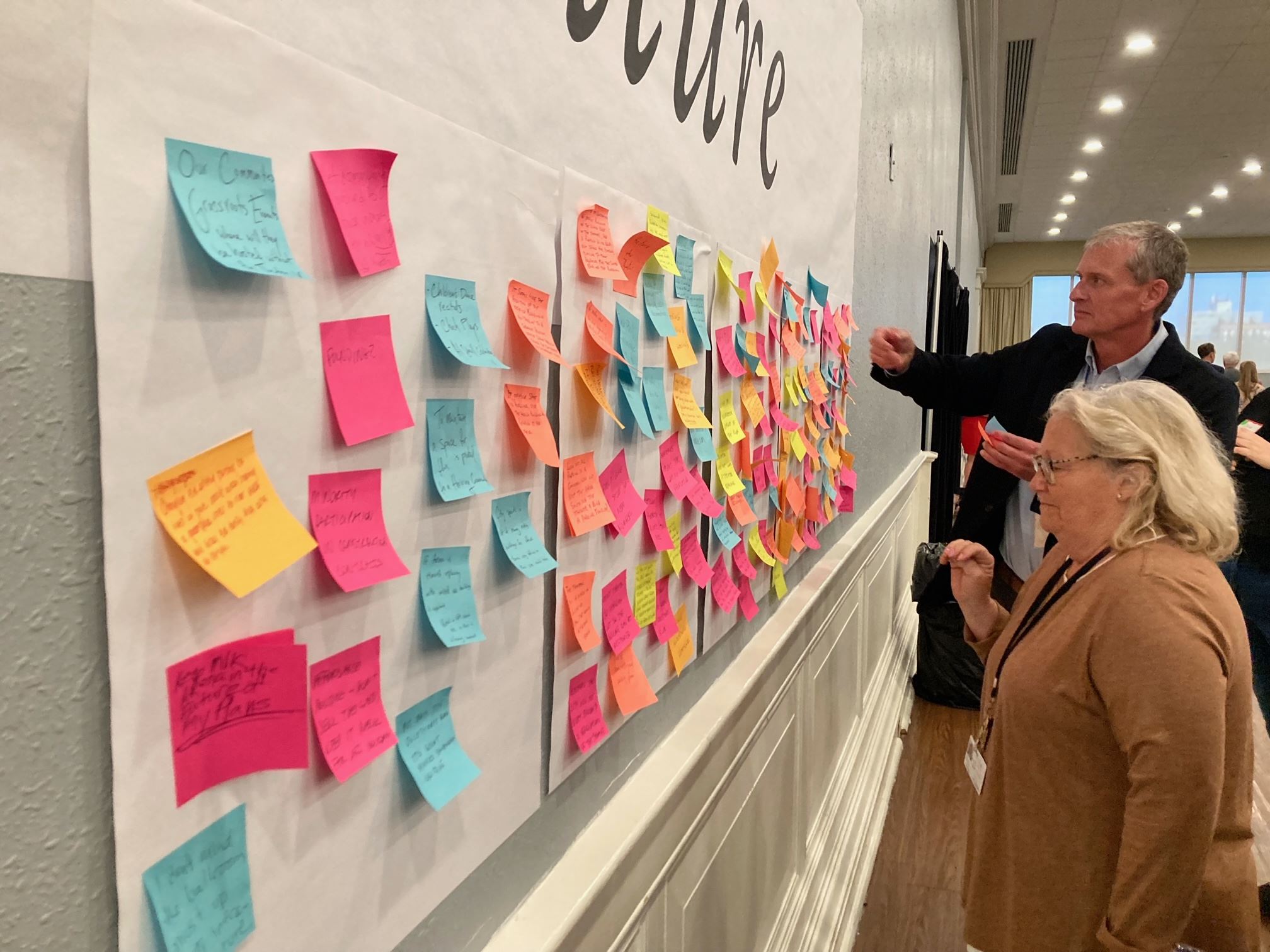 Since 2022, the City conducted further research to include conducting a cultural landscape analysis, civil site survey, and archaeology assessment as well as launching a public engagement process with five engagement events garnering nearly 500 comments.
On June 27, 2024 Savannah City Council passed a resolution in favor of removal of the arena and renovation of the theatre, ballroom, and community meeting rooms at the Civic Center site.
As part of their approval, City Council directed the City Manager to prepare and execute a plan, inclusive of robust community engagement and the required Council approval on annual or amended budgets, project financing, zoning, contracts and agreements, to accomplish the following:
- Proceeds with the renovation of the theatre, ballroom, and community meeting rooms;
- Achieves an equitable approach to redevelopment of the area;
- Retains the name and legacy of Dr. Martin Luther King, Jr.;
- Restores as much of the Oglethorpe Plan as feasible;
- Prioritizes housing, including affordable and workforce housing;
- Prohibits the development of new hotels and restricts the use of short-term vacation rentals;
- Optimizes space for public and municipal use, as well as appropriate retail and commercial spaces; and
- Achieves future parking needs.
The City of Savannah is excited about the future development of the Civic Center site and looks forward to further engagement with the community. Additional information about these next steps will be forthcoming.
History
1970s
In 1972, the City of Savannah completed the construction of the Savannah Civic Center on the site of the former Municipal Auditorium. The facility currently encompasses a 7.0-acre site—the equivalent of 10 city blocks—and includes the 9,700-seat Martin Luther King, Jr. Arena, 2,500-seat Johnny Mercer Theatre, ballrooms, several multi-purpose rooms used for several municipal and community purposes, and two levels of lobby space. A 275-space surface parking lot is also part of the site.
The Civic Center is located on the western edge of Savannah’s downtown and within the National Landmark Historic District. The construction of the site was an integral part of an urban renewal initiative in the 1970s where exceptions were made to the Oglethorpe Plan. Additionally, the Historic District Ordinance was not yet in place, allowing the Civic Center complex to claim parts of two of the City’s original wards—Elbert and Jackson—while also claiming a large part of Elbert Square. This disrupted original street patterns and closed off traffic to the rest of the Historic District to the east.
1990s
Recognizing the importance of the Historic District, it has been a goal of the City to re-establish the lost elements of the Oglethorpe Plan as this location. This potential goal was recognized in the late 1990s when the City noted an option to demolish the arena, construct a garage on its site, and rebuild the arena elsewhere, while retaining the theater, ballrooms, and meeting rooms. In addition, a 2001 Civic Center Arena Analysis ranked the site of the current civic center in the bottom rung of eight potential options for a new arena due to limitations caused by traffic congestion, the size of the parcel for future development, and inadequate parking. In September 2013, City Council approved the Springfield Canal/City Lot site for a new arena, but they had not yet decided the future of the Savannah Civic Center.
2010s
In 2016, the City appointed the Arena Advisory Committee for Utilization of the Current Civic Center which recommended that the theater, meeting rooms, and ballrooms be retained, and the arena be preserved for locally sponsored events. Concurrently, a Proposed Arena Feasibility Study commissioned by City Council recommended against preserving the arena due to the cost of renovations and repairs needed to bring the building in compliance with development standards, including, life safety, and ADA compliance.
Discussions about the future of the Civic Center site continued in 2017 and focused on the restoration of the Oglethorpe Plan and the ways the parcel diminishes the integrity of the National Landmark Historic District. This was emphasized in the report conducted by the Urban Land Institute (ULI) Technical Assistance Panel when they studied the Civic Center and surrounding area to determine the highest and best use for its redevelopment. In June 2019, Mayor and Aldermen unanimously adopted the ULI report Savannah Civic Center Redevelopment which strongly recommended that the entire Civic Center complex by removed in preparation for the restoration of the Oglethorpe Plan.
The City of Savannah wishes to thank the Community and Survey Partners for their sponsorship support: